Showing posts with label farm. Show all posts

Friday, June 3, 2016

How Did That Get In My Lunchbox? The Story of Food

FOR THE WEEKEND, share this fun title with your child! 

How Did That Get In My Lunchbox? The Story of Food is appropriate for children age 4 and up.

Summary:
How Did That Get In My Lunchbox? The Story of Food, from Chris Butterworth and Lucia Gaggiotto, takes you on a journey through your lunch box. The book explores how each piece of food came to your lunch, starting as a plant and ending as a tasty bit ready to be enjoyed. From climbing trees to milking cows to crushing apples in a factory, this book takes a complete look at food processing for young readers. A peak into food groups and healthy lifestyles add the perfect final piece to this fun and charming book.

Practice this Comprehension Strategy-Making Connections:
As you read How Did That Get In My Lunchbox? The Story of Food ask your child questions to connect the text to their own lives. What kind of food do they have in their lunches? Can they find any of the food that they eat in the story? Do they know other foods that might be made the same way? By asking your child to connect the book to their own life, you will be furthering their engagement with the story and deepening their understanding of the text.

Do this with your child:
After reading How Did That Get In My Lunchbox? The Story of Food take a trip to your local market (or even through your own kitchen) and walk through the aisles making note of some of the foods that you see. Can your child find any food from the story? Can they remember how those foods were made? 

If you're interested in sharing How Did That Get In My Lunchbox? The Story of Food with your child you can find it from Candlewick Press here. Please follow them on Twitter. For more from illustrator Lucia Gaggiotti check out her website.

Friday, October 23, 2015

The Little Scarecrow Boy

FOR THE WEEKEND, share this fun title with your child! 

The Little Scarecrow Boy is appropriate for children age 2-8.


Summary:
Sometimes it is hard to be patient when you're growing up, just ask The Little Scarecrow Boy written by Margaret Wise Brown and illustrated by David Diaz. He is learning all of the fierce faces he must make in order to scare the crows and keep the cornfield safe. His parents don't think he is quite ready yet, but one morning the little scarecrow boy sneaks out to try and prove them wrong. 

Practice this Comprehension Strategy-Build Background Knowledge:
Before opening up the book and reading The Little Scarecrow Boy, focus on the cover picture and ask your child questions that will help them think about what they are going to read and make connections to the story. Here are some question suggestions:

  • Do you know what a scarecrow is? 
  • Where have you seen a scarecrow before?
  • What do scarecrows do? 
  • Why do farmers have scarecrows?  

Do this with your child-Body Movement:
As you read through The Little Scarecrow Boy, allow your child to engage in body movement. They will hang on your every word knowing they'll get to make a silly, scary, fierce face when the little scarecrow boy does. Your child will love participating with the story in a physical way. Whenever the little scarecrow boy makes a face, have your child make a face too. Whenever old man or old lady scarecrow make a face, the reader can make a face as well. 

If you're interested in sharing The Little Scarecrow Boy with your child you can find it from Harper Collins Publishers here.

Friday, August 21, 2015

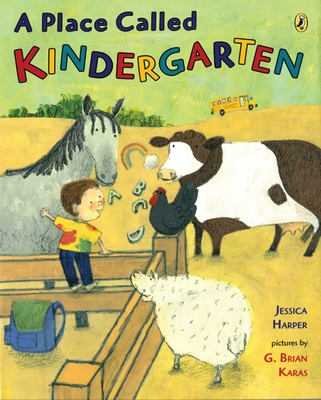
A Place Called Kindergarten

FOR THE WEEKEND, share this fun title with your child! 

A Place Called Kindergarten is especially appropriate for a child who will be starting (or has started) Kindergarten! 


2008, Puffin Books
Summary:
The animals in the barn become worried when Tommy doesn't come to see them in the morning. When they find out that Tommy is in Kindergarten that doesn't help them much. What is kindergarten? Where is kindergarten? Will Tommy ever come back? Their anxieties are gone once Tommy returns home to tell them all about his first day of school.

Practice this Comprehension Strategy-Compare and Contrast:
Tommy lives on a farm. Help your child develop their comparing and contrasting skills by talking with your child about how Tommy's home compares to your own. Tommy is very excited to share his stories after his first day of Kindergarten. You can also help your child make text-to-self connections by asking your child if they are excited about going to school and what they think they will learn about.

Do this with your child:
Every page in A Place Called Kindergarten is adorned with charming illustrations of farm animals. Engage your child and make the book sharing experience interactive by making the sounds of the animals with your child as you read through the story.

If you're interested in sharing A Place Called Kindergarten with your child you can find it here.