Showing posts with label book sharing. Show all posts

Friday, March 17, 2017

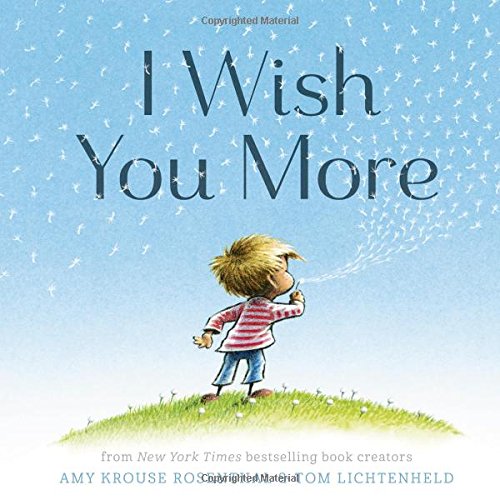
I Wish You More

FOR THE WEEKEND, share this title with your child. 

I Wish You More is appropriate for children of all ages.

Summary:
I Wish You More is a beautiful book brimming with love and hope from authour Amy Krouse Rosenthal and illustrator Tom Lichtenheld. Each page has a heartfelt statement that starts "I wish you more..." and whether it be ups than downs, umbrella than rain, or treasures than pockets, you can feel the love seeping through the pages. 

Practice this Comprehension Strategy-Retelling:
After you read I Wish You More let your child take a turn retelling the story to you. Have them flip the pages and use the images as a guide to prompt their memory. If they ask questions, help them out, otherwise they are the leader this time!

Do this with your child:
Sadly Amy Krouse Rosenthal passed away this week. We would like to pay tribute to an amazing author, wonderful mother, and incredible human being. I Wish You More is filled with kind wishes and sweet sentiments to share with someone you love. Publisher Chronicle Books has called on their followers to keep sharing that love, saying of Amy 

She inspired us to want more for ourselves. More for our children, our families, our friends. More for the strangers at the bus stop and for the person who took our parking spot this morning.
So please be inspired by Amy; tell those around you what you wish for them. 

You can find Chronicle Book's tribute and pdf of the umbrella sheet here. Take a moment to fill one out with your child and share with #loveforamykrouserosenthal.

If you're interested in sharing I Wish You More with your child, along with a handful of other wonderful Amy Krouse Rosenthal titles, you can find it from Chronicle Books here. Please like them on Facebook and follow them on Twitter & Instagram for more inspiration.


Click here to learn more about Raising A Reader and the work we do to promote early literacy and family engagement. 

Stay connected on Facebook, Twitter, Instagram and Pinterest.

Friday, September 16, 2016

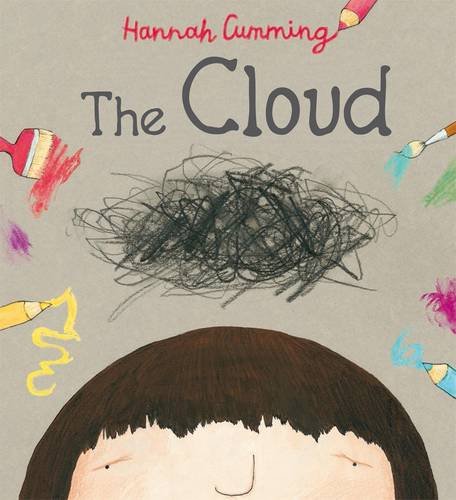
The Cloud


FOR THE WEEKEND, share this fun school themed title with your child! 

The Cloud is appropriate for children of all ages.


Summary:
The Cloud from author and illustrator Hannah Cumming is a wonderful and simple story about the power of friendship. A little girl never draws anything in art class, she sits by herself, looking at her paper, with a black cloud over her head. But one of her classmates is determined to befriend this little girl and make her smile. Follow along with the charming illustrations and simple text to see how one child's attempt at inclusion turns into a class-wide epidemic. 

Practice this Comprehension Strategy-Making Connections:
The Cloud is a perfect story to open up a conversation about friendship and emotions as we enter the new school year. You can ask your child if they have ever felt like they have a black cloud over their head, and what happened to turn that cloud into a smile. Have they ever noticed a classmate or friend who is gloomy or upset? Talk about ways they can help make that child feel better, and ways to reach out and make new friends. By making these emotional connections to the text, your child will be able to further engage with the story and hopefully see themselves in the book.

Do this with your child:
Drawing is used to bring friends together in The Cloud. Work with your child to make a drawing together just like in the story. If you have multiple children, have them make a drawing or two together as well. Display these new creations proudly!

If you're interested in sharing The Cloud with your child you can find it from Child's-Play here. Please like them on Facebook and follow them on Twitter.

Friday, August 26, 2016

Happy Like Soccer

FOR THE WEEKEND, share this fun Olympic themed title with your child! 

Happy Like Soccer is appropriate for children of all ages.


Summary:
Sienna loves soccer. Nothing makes her as happy as when she's playing. But nothing also makes her as sad. While she loves the game and has fun playing, she wants her aunt to be able to come to the game and cheer her on too. But her aunt works on game days and isn't able to make it. The one day she is able to switch her schedule, the game is rained out. See if Sienna is able to get her coach to change the game day and time in order to have her family there cheering her on in Happy Like Soccer.

Practice this Comprehension Strategy-Inferring:
As you read Happy Like Soccer ask your child questions about what they think will happen next based on what you've read so far. They'll be more engaged as you read forward, more invested in knowing whether or not the predictions they have made based on context clues are coming true. 

Do this with your child:
In Happy Like Soccer Sienna loves to play soccer. Has your child ever played soccer? Take the opportunity to go outside and play! You can try baseball or any sport that you've seen during the Olympics; it is always fun to try something new and play outside. Playing a sport or a game will help your child learn teamwork, let them practice following directions, and build self esteem. You can also make signs to cheer on friends or family members who are playing a sport as well.

If you're interested in sharing Happy Like Soccer with your child you can find it from Candlewick Press here. Please like them on Facebook and follow them on Twitter.

Friday, July 8, 2016

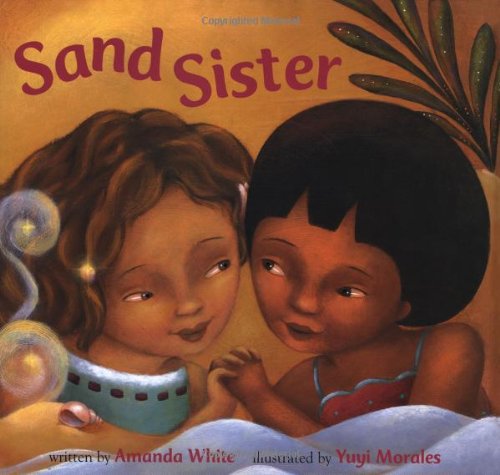
Sand Sister

FOR THE WEEKEND, share this fun summer time title with your child! 

Sand Sister is appropriate for children of all ages.


Summary:
Paloma and her parents spend a magical day at the beach in Sand Sister written by Amanda White. When Paloma sees all of the other children playing with their siblings on the beach she draws herself a sister in the sand and makes a wish to have her very own sibling to play with. See how her wish is granted in this charming story of imagination and friendship.

Practice this Comprehension Strategy-Take a Picture Walk:
Before you read Sand Sister take a picture walk through the story and ask your child what they see on each page. Start by just asking about what is on the page, a family, rocks, the ocean, etc. You can then take that information further and ask what they think is happening and what will happen next. After you read the story see if any of their predictions were correct.

Do this with your child:
Sand Sister is a story fueled by a little girl's imagination and play. Ask your child to draw a picture of something or someone that they would come to life and help them to write a short story of their own about this person or creature.  

If you're interested in sharing Sand Sister with your child you can find it from Barefoot Books here. Please like them on Facebook and follow them on Twitter. For more from illustrator Yuyi Morales check out her website. 

Friday, July 1, 2016

Nathan Saves Summer

FOR THE WEEKEND, share this fun summer time title with your child! 

Nathan Saves Summer / Nathan rescata el verano is appropriate for children age 4 and up.
Summary:
Join Nathan the hippopotamus in Nathan Saves Summer / Nathan rescata el verano. It is Nathan's lifelong dream to be the lifeguard at the pond where he and his friends spend their entire summer. But all of the animals think that Nathan is just too big to be the lifeguard in their little pond and Nathan starts to think that maybe they're right. Nathan finally gets his chance to prove them wrong when he sees the tiger cub bobbing in the water. Will this save summer or spell disaster for the small pond?  

Practice this Comprehension Strategy-Making Connections:
Nathan Saves Summer / Nathan rescata el verano is a great story for your child to make connections with this summer. As so many families enjoy their vacation, they can be found gathering around pools, lakes, creeks and oceans just how the animals gather at the pond. Asking questions about the similarities and differences between the story and your child's own summer will further their involvement with the text and deepen their engagement with the story.

Do this with your child:
Nathan Saves Summer / Nathan rescata el verano is a bilingual story with a vocabulary list found on the last page. Practice first reading the story in the language you are most comfortable with but adding in some of the vocabulary from the language that is new to you! 

If you're interested in sharing Nathan Saves Summer / Nathan rescata el verano with your child you can find it from Raven Tree Press here. For more from author Gerry Renert check out his website and more from illustrator Carrie Anne Bradshaw check out her website. 

Friday, June 24, 2016

How My Parents Learned to Eat

FOR THE WEEKEND, share this fun title with your child! 

How My Parents Learned to Eat is appropriate for children age 4 and up.

Summary:
How My Parents Learned to Eat tells the story of John and Aiko, an American sailor and a Japanese school girl. They meet while John is stationed in Japan and they spend every evening together walking and talking. John would like to ask Aiko to dinner but he is nervous because he does not know how to use chopsticks. Aiko thinks maybe John is not asking her to dinner because she does not know how to use a knife and fork. They each secretly learn how to use the other's utensils and finally have dinner together.

Practice this Comprehension Strategy-Sequencing:
How My Parents Learned to Eat is a great story to practice sequencing, putting events in the order which they happened. Have your child tell you what happens first, what comes next, and what happens last. Use words like before, then, after and next to transition between events in the story. By recalling events and characters your child is deepening their engagement with the story.

Do this with your child:
After reading How My Parents Learned to Eat enjoy a meal using a utensil you don't typically use. Try eating different foods with chopsticks versus a fork and knife. Talk about which foods are easier to use with which utensils and decide if you have a favorite to  use.

If you're interested in sharing How My Parents Learned to Eat with your child you can find it from Houghton Mifflin Harcourt here. Please like them on Facebook and follow them on Twitter. 

Friday, June 17, 2016

Bread and Jam for Frances

FOR THE WEEKEND, share this fun title with your child! 

Bread and Jam for Frances is appropriate for children age 4 and up.

Summary:
Bread and Jam for Frances tells the story of Frances and her absolute favorite food. Frances loves bread and jam, she won't eat her egg and trades her lunch at school and refuses to touch her dinner so that she can have bread and jam instead. So Mother decides that if bread and jam is what Frances wants, bread and jam is what Frances will get. She is served bread and jam for every meal. But as it turns out, maybe Frances would like to have something different! Follow along with this picky eater and learn the joy in trying something new.

Practice this Comprehension Strategy-Retelling:
After you read Bread and Jam for Frances ask your child to tell you what happened in the story. Ask first for the characters and the setting. Then ask questions about the events in the story. Let them turn the pages to prompt their responses. Or you can let them flip through the pages and tell their very own story about Frances and her picky eating!

Do this with your child:
After reading Bread and Jam for Frances talk to your child about their favorite food. Ask them if they think they would also get tired of eating the same exact thing every single day. This book is a great jumping point for picky eaters. If you can, try a new meal for dinner tell your child they are just like Frances! Frances also loves jumping rope in the story. The better she eats the more she can jump. You can do an experiment with your child to see which foods help them jump the most!

If you're interested in sharing Bread and Jam for Frances with your child you can find it from Harper Collins here. Please follow them on Twitter. 

Friday, June 10, 2016

I Will Never Not Ever Eat a Tomato

FOR THE WEEKEND, share this fun title with your child! 

I Will Never Not Ever Eat a Tomato is appropriate for all ages.

Summary:
I Will Never Not Ever Eat a Tomato is a new take on the classic picky eater tale. Lola is very fussy about food. But when brother Charlie explains that those are not peas, but rather incredibly rare Greendrops from Greenland, she just has to try them. But what about those tomoatos? Will Lola be tricked into trying those?

Practice this Comprehension Strategy-Take a Picture Walk:
Before you read I Will Never Not Ever Eat a Tomato flip through the pages with your child asking what they see. Talk about the different foods that are on the pages. Ask your child if Lola looks happy or curious or mad. After discussing what you see on the pages, ask your child to make a prediction about what they think is happening in the story. After you read, see if any of their predictions were correct!

Do this with your child:
After reading I Will Never Not Ever Eat a Tomato talk with your child about their favorite part of the story. Have them draw a picture of their favorite part or of a food they think can be called something else. If you have a picky eater at home, use this book as a platform to start trying new things!

If you're interested in sharing I Will Never Not Ever Eat a Tomato with your child you can find it from Candlewick Press here. Please follow them on Twitter. Click here for more from author/illustrator Lauren Child. 

Friday, June 3, 2016

How Did That Get In My Lunchbox? The Story of Food

FOR THE WEEKEND, share this fun title with your child! 

How Did That Get In My Lunchbox? The Story of Food is appropriate for children age 4 and up.

Summary:
How Did That Get In My Lunchbox? The Story of Food, from Chris Butterworth and Lucia Gaggiotto, takes you on a journey through your lunch box. The book explores how each piece of food came to your lunch, starting as a plant and ending as a tasty bit ready to be enjoyed. From climbing trees to milking cows to crushing apples in a factory, this book takes a complete look at food processing for young readers. A peak into food groups and healthy lifestyles add the perfect final piece to this fun and charming book.

Practice this Comprehension Strategy-Making Connections:
As you read How Did That Get In My Lunchbox? The Story of Food ask your child questions to connect the text to their own lives. What kind of food do they have in their lunches? Can they find any of the food that they eat in the story? Do they know other foods that might be made the same way? By asking your child to connect the book to their own life, you will be furthering their engagement with the story and deepening their understanding of the text.

Do this with your child:
After reading How Did That Get In My Lunchbox? The Story of Food take a trip to your local market (or even through your own kitchen) and walk through the aisles making note of some of the foods that you see. Can your child find any food from the story? Can they remember how those foods were made? 

If you're interested in sharing How Did That Get In My Lunchbox? The Story of Food with your child you can find it from Candlewick Press here. Please follow them on Twitter. For more from illustrator Lucia Gaggiotti check out her website.

Friday, May 27, 2016

Curious George Visits the Library/Jorge el curioso va a la biblioteca

FOR THE WEEKEND, share this fun title with your child! 

Curious George Visits the Library/Jorge el curioso va a la biblioteca is appropriate for all ages.

Summary:
In Curious George Visits the Library/Jorge el curioso va a la biblioteca from Martha & H.A. Rey, George is lucky to arrive at the library just in time for story hour. But it’s not easy for a little monkey to sit still too long and he just has to get his hands on that dinosaur book. George quickly finds so many books he wants to read and can’t wait to take them home. As usual, George also finds himself in a bit of trouble. With help from friends and the librarians, he is able to clean up his mess. From selecting books to getting his very own library card, George’s day at the library celebrates all the fun of visiting the library and sharing books!

Practice this Comprehension Strategy-Summarizing:
After you read Curious George Visits the Library/Jorge el curioso va a la biblioteca ask your child to summarize the story. Ask about the main characters, where the story takes place, the events that happen in the story and how the story ends. If they need to, let them hold the book and look through the pages to see where Curious George is and what he is doing. By answering questions and looking through the book, your child will be recalling details and engaging with the story in a deeper way.

Do this with your child:
After reading Curious George Visits the Library/Jorge el curioso va a la biblioteca take a trip to your local library and see if you can find any books like the ones Georgre found. While you're there, make connections between your local library and the library George visits. Check out a favorite book or two and enjoy. Sign your child up for a library card if they don't already have one just like George! Since this is a bilingual text, we also encourage you to practice reading in both languages!

If you're interested in sharing Curious George Visits the Library/Jorge el curioso va a la biblioteca with your child you can find it from Houghton Mifflin Harcourt here. Please like them on Facebook and follow them on Twitter and Instagram.

Friday, May 20, 2016

The Library

FOR THE WEEKEND, share this fun title with your child! 


The Library is appropriate for all ages.


Summary:
Follow the story of Elizabeth Brown in The Library from author Sarah Stewart and illustrator David Small.Elizabeth Brown was different than the other children, she didn't want to to play with dolls, she didn't want potato chips, she wanted to read. As she grew older, her book collection grew and grew until there was not even room to get to her front door. The way she solves the problem will warm the hearts of book lovers, young and old.

Practice this Comprehension Strategy-Sequencing:
After you read The Library pull out some of the major details. You might want to choose Elizabeth Brown falls from the sky, she goes to school, buys a house, she vacuums or buys groceries, and finally she opens a library. Ask your child about the order in which these events occur in the story, Use words like "first," "then," and "next."  This will further their engagement in the story and therefore their comprehension of the text.

Do this with your child:
After reading The Library take a trip to your local library and pick out a handful of books to take home. Sign your child up for a library card if they don't already have one!

If you're interested in sharing The Library with your child you can find it from Square Fish, an imprint of Macmillan Publishers here. Please like them on Facebook and follow them on Twitter and Instagram.


Friday, May 13, 2016

Library Lion

FOR THE WEEKEND, share this fun title with your child! 

Library Lion is appropriate for ages 4 and up.


Summary:
In Library Lion from author Michelle Knudsen and illustrator Kevin Hawkes, a lion wanders into the library one fateful day and decides to stick around. Miss Merriweather, the head librarian, is very particular about the rules. But there are no rules about lions in the library. It seems a lion is well suited for a library, he quietly walks through the building, he helps children reach the books they need, and he doesn't roar (anymore.) But what happens when there's an accident and the only way he knows how to help is to break the rules?

Practice this Comprehension Strategy-Take a Picture Walk:
Before you read Library Lion walk through the pages with your child. Use the charming and expressive illustrations to ask them what they see on each page. After talking about what the pictures are, ask them to make predictions about what they think is happening. Then as you read, talk with your child about whether their predictions came true. 

Do this with your child:
After reading Library Lion ask your child what their favorite part of the story was and why. Then have them draw a picture of their favorite part. You can also take a trip to your local library to see if there are any lions helping the librarians!

If you're interested in sharing Library Lion with your child you can find it from Candlewick Press here. Please like them on Facebook and follow them on Twitter.
For more from author Michelle Knudsen check out her website. For more from illustrator Kevin Hawkes check out his website.

Friday, May 6, 2016

Maisy Goes to the Library

FOR THE WEEKEND, share this fun title with your child! 

Maisy Goes to the Library is appropriate for all ages.

Summary:
Maisy Goes to the Library from author Lucy Cousins is a charming story of Maisy's library visit. She is looking for a book about fish but can't find one. She decides to explore all the other fun things that the library has to offer, looking on the computer, making copies of pictures, and watching the fish in the aquarium. That's where she finds it, a sparkly book about fish! As she finds a quiet corner to read, her friends walk in for story time. Will Maisy ever find a nice, quiet place to enjoy her fish book?

Practice this Comprehension Strategy-Making Connections:
As you read Maisy Goes to the Library ask your child questions about the story in relation to their own life and experiences. This is a perfect story to make connections to your own local library branch. Does your library have books about tigers, or computers to work on, is there music to listen to, or an aquarium to watch the fish swimming? Has your child read any books about fish like Maisy? Find some similarities and differences between your own local library and Maisy's. The story can be a mirror where they can see similarities of their own life reflected in the pages, or a window where they can look out into other's lives and see what's different than their own. This will further their interest and engagement in the story.

Do this with your child:
After reading Maisy Goes to the Library take a trip to your local library and see if you can find any books like the one's Maisy found. Check out a favorite book or two and find your own nice, quiet place to read. Sign your child up for a library card if they don't already have one!

If you're interested in sharing Maisy Goes to the Library with your child you can find it from Candlewick Press here. Please like them on Facebook and follow them on Twitter.

Friday, April 29, 2016

Alexander, Who Used to be Rich Last Sunday

FOR THE WEEKEND, share this fun title with your child! 

Alexander, Who Used to be Rich Last Sunday is appropriate for children age 5-9.

Summary:
Alexander's grandparents came to visit and Alexander knows that when they come, they bring a dollar for him and his brothers. He loves when his grandparents visit because he loves money. But in Alexander, Who Used to be Rich Last Sunday he quickly learns how fast that dollar can disappear. Follow along with the story written by Judith Viorst and illustrated by Ray Cruz to discover where all of Alexander's money disappears.

Practice this Comprehension Strategy-Making Connections:
As you read Alexander, Who Used to be Rich Last Sunday you will be able to help your child find connections to their own life. This book can be a window into their own spending habits or a mirror to reflect a possibly less desirable outcome for their money. You can ask have a conversation about whether your child has ever wanted to spend their money right away, if they find it hard to save their money, or if there has ever been something that they really wanted that they would save their money to buy. 

Do this with your child:
Alexander, Who Used to be Rich Last Sunday provides an excellent opportunity to practice your child's financial literacy skills. Alexander has one dollar bill but as he spends his money, his total is less and less. For older children, keep track of the amounts that he's spending to see how much he has left. You can use real money to help keep track of the amount. For younger children, talk about the different types of money, bills and coins, and help your child recognize them by size and color. For the youngest children, coin sorting and stacking can be a fun activity to go along with the story.

If you're interested in sharing Alexander, Who Used to be Rich Last Sunday with your child you can find it from Aladdin Paperbacks, a division of Simon & Schuster here. Please like them on Facebook and follow them on Twitter and Instagram.

Friday, April 22, 2016

Start Saving Henry

FOR THE WEEKEND, share this fun title with your child! 

Start Saving Henry is appropriate for children ages 5 and up.

Summary:
Now that Henry has turned seven, he is able to earn a weekly allowance by doing all of his chores. Every week he runs out and spends his money right away until he sees something he really wants, the Super Robot Dude. The Super Robot Dude is too expensive so Henry has to start saving his allowance. But in Start Saving Henry he learns how hard it can be to save. Continue to read and find out if Henry ever gets his new toy.

Practice this Comprehension Strategy-Retelling:
As you read Start Saving Henry ask your child questions about what is happening in the story. This will further their engagement in the story and allow them to make deeper connections. After you finish the story, have your child take a turn to read it to you. Let them lead the way, turning the pages and telling the story as they recall. It may be a different story than the one that you told, but that is okay!

Do this with your child:
Start Saving Henry provides an excellent opportunity to practice your child's financial literacy skills. Henry earns five dollars every week. You can use this story and it's pictures to practice counting by fives. 

If you're interested in sharing Start Saving Henry with your child you can find it from Viking, a division of Scholastic here. Please like them on Facebook and follow them on Twitter.

For more from author and illustrator Nancy Carlson check out her website.


Friday, April 15, 2016

A Dollar for Penny

FOR THE WEEKEND, share this fun title with your child! 

A Dollar for Penny is appropriate for Preschool to Grade 1.

Summary:
Penny sells lemonade for one cent, but in A Dollar for Penny the price goes up! With each new sale, Penny charges a little bit more. Follow along with the story from author Dr. Julie Glass and illustrator Joy Allen to see how much money she makes and what she buys with her profit!

Practice this Comprehension Strategy-Making Predictions:
A Dollar for Penny is a great book for practicing making predictions. Each person that comes to buy lemonade from Penny seems to have something special with them. Have your child pay attention to the illustrations as you read together to make an educated guess about what they think Penny will buy and what will happen in the end of the story. 

Do this with your child:
After reading A Dollar for Penny talk with your child about different ways that they can earn money. Discuss that in order to earn money, they have to work for it. Maybe they can sell lemonade like Penny, or do chores around the house like setting the table or doing the dishes.  

If you're interested in sharing A Dollar for Penny with your child you can find it from Penguin Random House here. Please like them on Facebook and follow them on Twitter and Instagram.