Friday, June 16, 2017

Papa, Do You Love Me?

FOR THIS FATHER'S DAY WEEKEND, share this title with your child. 

Papa, Do You Love Me? is appropriate for children of all ages.
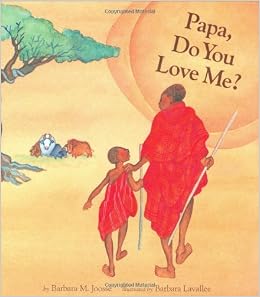
Image result for papa do you love me


Summary:
Papa, Do You Love Me? is a beautiful book to read this Father's Day. When a young boy in Africa asks his father if he loves him, he learns that his father's love is unconditional. Beautiful watercolor images from Barbara Lavallee and lyrical text from Barbara M. Joosse capture a bond that will translate across every culture.

Practice this Comprehension Strategy-Make Connections:
As you read Papa, Do You Love Me? ask you reader questions about their own relationship with their father (or stepfather or grandfather or big brother.) Even if you are not in the desert of Africa, your father will still do things to prove that he loves you. Talk with your child about what these things are in your family. By engaging with the book in  this way, your reader will build a deeper connection to the text and have a more impactful experience all together.


Do this with your child:

After you read Papa, Do You Love Me? have fun filling out this Father's Day questionnaire with your kiddos. Have them draw a picture of their dad and then ask them the questions and fill in their answers. It will make a Father's Day gift to treasure forever! 

If you're interested in sharing Papa, Do You Love Me? with your child you can find it from Chronicle Books here. 


Click here to learn more about Raising A Reader and the work we do to promote early literacy and family engagement. 

Stay connected with us on Facebook, Twitter, Instagram and Pinterest.

Friday, June 9, 2017

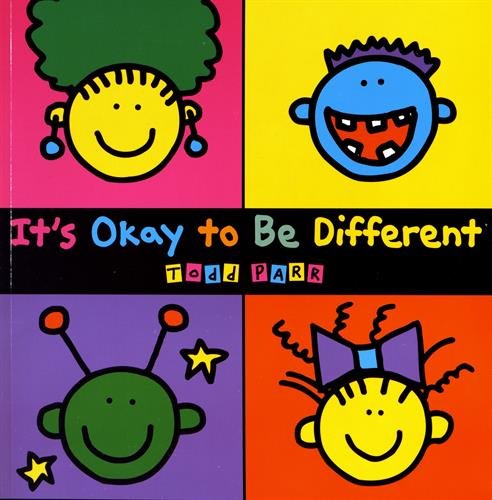
It's Okay to be Different

FOR THE WEEKEND, share this title with your child. This month we are celebrating differences!

It's Okay to be Different is appropriate for children of all ages.


Summary:
It's Okay to be Different from author Todd Parr is a celebration of the diversity in the human race. Whether you have a different nose, you're a different color, or you have different abilities, Todd Parr's bright and fun illustrations and simple text remind us that it's okay! Acceptance, understanding and confidence all shine through in this wonderful and happy book.

Practice this Comprehension Strategy-Summarize:
After you read It's Okay to be Different ask you reader to tell you what the book was about. Can they tell you the overall idea/lesson that they learned while reading the book? Did they have a favorite part, or did they feel a connection to any of the people portrayed in the story? By engaging with the book in  this way, they will build a deeper connection to the text and have a more impactful experience all together.


Do this with your child:

After you read It's Okay to be Different try this fun experiment with your child! Have both a brown egg and a white egg. Talk with your child about what makes them different. Then crack them into a bowl. And talk about what they see. They'll find that even though they were different on the outside, they're made of the same things on the inside - just like all of us! 

If you're interested in sharing It's Okay to be Different with your child you can find it from Little Brown & Co here. 


Click here to learn more about Raising A Reader and the work we do to promote early literacy and family engagement. 

Stay connected with us on Facebook, Twitter, Instagram and Pinterest.

Friday, June 2, 2017

A Rainbow of Friends

FOR THE WEEKEND, share this title with your child. This month we are celebrating differences!

A Rainbow of Friends is appropriate for children of all ages.


Summary:
A Rainbow of Friends from author P.K. Hallinan celebrates the differences that make all people special. Friends come in all colors and sizes. They may be funny or serious, athletes or stars, shy or outgoing. But no matter our differences we can work together and be kind kind to each other. This book is wonderful reminder to celebrate our differences together!

Practice this Comprehension Strategy-Make Connections:
After you read A Rainbow of Friends take the time to talk with your child about their own friends. Is everybody exactly the same? Do they have friends, like the ones on the book, with different talents, different abilities, different clothes? When a reader is able to engage with a story in a personal way they will be more invested in the text and the entire book sharing experience.

Do this with your child:

After you read A Rainbow of Friends have you child draw apicture of their friends all together. Ask them to include something about each friend that makes them different and special. When they're done, you can make copies of the picture for your child to share with their friends!

If you're interested in sharing A Rainbow of Friends with your child you can find it from GuidepostBooks here. 

Click here to learn more about Raising A Reader and the work we do to promote early literacy and family engagement. 

Stay connected with us on Facebook, Twitter, Instagram and Pinterest.

Friday, May 26, 2017

On a Beam of Light: A Story of Albert Einstein

FOR THE WEEKEND, share this STEM title with your child. 

On a Beam of Light: A Story of Albert Einstein is appropriate for children of all ages.


Summary:
Author Jennifer Berne tells the true story of the ever curious Albert Einstein's life in On a Beam of Light: A Story of Albert Einstein. Your reader will learn about Albert from childhood and beyond as he questioned everything around him, and created ideas and thoughts to explain all of life's mysteries. Albert thought from the smallest scale, exploring atoms that make everything up, to the largest scale, researching the size and shape if the entire universe. If your reader is a curious kid, they will delight in learning about Albert Einstein, the genius.

Practice this Comprehension Strategy-Take A Picture Walk:
On a Beam of Light: A Story of Albert Einstein is a wonderful book to take a picture walk before reading. Flip through the pages with your reader and ask what they see on each page. You'll find a baby growing from a tiny newborn into a white haired gentleman. As you go through the pages, ask your child what is happening around the baby, the boy and the man. Then when you read the story relate what your reader noticed in your picture walk to the story.

Do this with your child:

After you read On a Beam of Light: A Story of Albert Einstein check out some kid friendly science experiments to spark your reader's curiosity from Architecture and Design here.

If you're interested in sharing On a Beam of Light: A Story of Albert Einstein with your child you can find it from Chronicle Books here. Please like them on Facebook and follow them on Twitter & Instagram for more inspiration.


Click here to learn more about Raising A Reader and the work we do to promote early literacy and family engagement. 

Stay connected with us on Facebook, Twitter, Instagram and Pinterest.

Friday, May 19, 2017

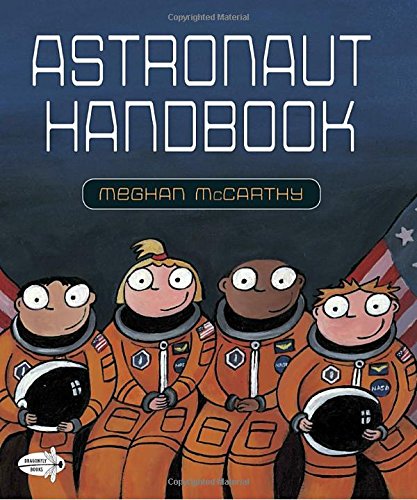
Astronaut Handbook

FOR THE WEEKEND, share this STEM title with your child. 

Astronaut Handbook is appropriate for children of all ages.


Summary:
Author Meghan McCarthy takes young readers to astronaut school in Astronaut Handbook. Your reader, no matter their interests, can find a spot in outer space. Whether you like biology or engineering or flying planes or deep sea diving, there are jobs of all kinds that need doing. But before you get to space, you must train very hard - fitness tests, survival training, teamwork and lots of studying will prepare you for your journey. McCarthy does a fantastic job conveying difficult concepts and ideas using easy to understand text and images which will spark your child's imaginations and get them excited about blasting off!

Practice this Comprehension Strategy-Summarize:
Astronaut Handbook is a great book to practice summarizing. As you read, make a point to ask questions and answer any questions your child might have. Engaging your child while reading will help them be able to better summarize the text afterward. Once you've finished, let your child hold the book and flip through the pages as they tell you about the different jobs that astronauts do, they ways they train, and all the preparation for their trip to space.

Do this with your child:

After you read Astronaut Handbook you and your reader can check out the NASA Kids' Club here. The site is filled with fun games and activities to check out with your space explorer.

If you're interested in sharing Astronaut Handbook with your child you can find it from Penguin Random House here. Please like them on Facebook and follow them on Twitter & Instagram for more inspiration.


Click here to learn more about Raising A Reader and the work we do to promote early literacy and family engagement. 

Stay connected with us on Facebook, Twitter, Instagram and Pinterest.

Friday, May 12, 2017

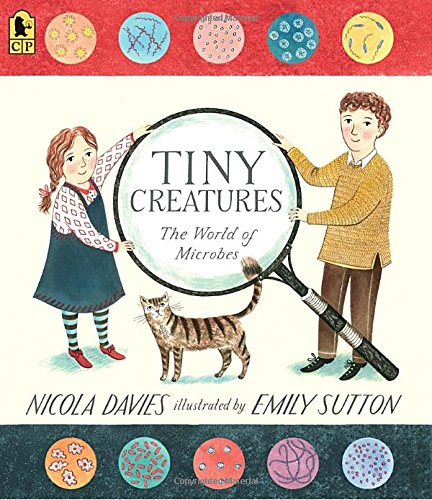
Tiny Creatures: The World of Microbes

FOR THE WEEKEND, share this STEM title with your child. 

Tiny Creatures: The World of Microbes is appropriate for school age children.


Summary:
Tiny Creatures: The World of Microbes explores a world unseen by the human eye. The text explores the size and quantity of the microbes, diving further into the many amazing things these tiny creatures accomplish. Author Nicola Davies, a zoologist, does an incredible job explaining a vast concept to little minds. Illustrator Emily Sutton's images create a visual understanding that young and old will appreciate. 

Practice this Comprehension Strategy-Making Connections:
Tiny Creatures: The World of Microbes is a wonderful book to practice making connections. After you read, talk with your child about all of the ways that microbes interact with their own environment. Do they eat yogurt? Have they washed the playground dirt off their hands? Do they enjoy watching the clouds in the sky? All of these activities, and so many more, involve the work of microbes.

Do this with your child:

After you read Tiny Creatures: The World of Microbes you and your reader can make some large scale microbes of your own. Bust out the pipe cleaners, the pom poms, the wiggle eyes and the glue and recreate some of the images from the book or create your own microbe art!
Image result for pipe cleaner microbes craft


If you're interested in sharing Tiny Creatures: The World of Microbes with your child you can find it from Candlewick Press here. Please like them on Facebook and follow them on Twitter & Instagram for more inspiration.


Click here to learn more about Raising A Reader and the work we do to promote early literacy and family engagement. 

Stay connected with us on Facebook, Twitter, Instagram and Pinterest.

Friday, May 5, 2017

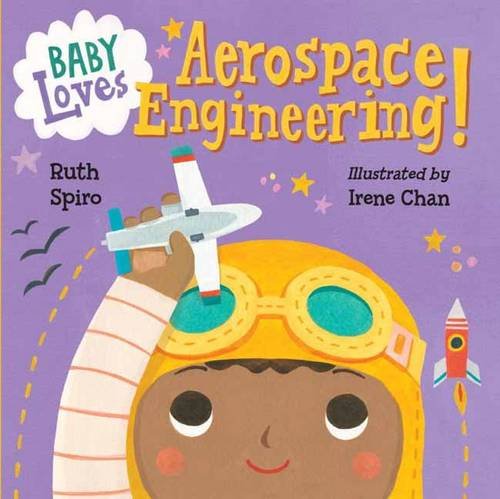
Baby Loves Aerospace Engineering

FOR THE WEEKEND, share this STEM title with your child. 

Baby Loves Aerospace Engineering is appropriate for younger children.


Summary:
Baby Loves Aerospace Engineering is an adorable introduction to the world of aerospace engineering. Your child will delight in bright and bold images as simple text explain the basic fundamentals of flight, from birds to planes to rockets. Ruth Spiro and Irene Chan's explanations and images will satisfy an expert and captivate your child in this one of a kind STEM board book.

Practice this Comprehension Strategy-Retelling:
Baby Loves Aerospace Engineering is a wonderful book to practice retelling with your child. After you read, let your child take a turn and read the book to you. Offer help if they need it but otherwise let them lead the way! This is a great strategy to build confidence in their 'reading' and strengthen their memory and inference skills. 

Do this with your child:

After you read Baby Loves Aerospace Engineering practice flight on your own! Below is an easy tutorial to follow to make your own paper airplanes.
Image result for paper airplane


If you're interested in sharing Baby Loves Aerospace Engineering with your child you can find it from Charlesbridge Publishing (currently out of stock so we've provided a link to Amazon) here. Please like them on Facebook and follow them on Twitter & Instagram for more inspiration.


Click here to learn more about Raising A Reader and the work we do to promote early literacy and family engagement. 

Stay connected with us on Facebook, Twitter, Instagram and Pinterest.