Friday, January 8, 2016

Rain

HAPPY NEW YEAR! Winter is upon us and in California, we're finally getting rain! FOR THE WEEKEND, share this fun title with your child! 

Rain is appropriate for children age 2-8.

Summary:
Winter isn't always about snow! In the bright and bold Rain, written and illustrated by Manya Stojic, the animals in the hot dry land all sense that the rain is coming. Each animal can tell for a different reason, zebra can see it, rhino can feel it, and porcupine can smell it. Once the winter and rain are over, the hot dry land is transformed into a whole new landscape. Use your senses and explore the rain with the animals.

Practice this Comprehension Strategy-Retelling:
After you read Rain ask your child to take a turn and read the story to you. Retelling a story helps your child refine their understanding of the story, and helps them to develop concepts about words and books. As they're retelling, see if your child can correctly remember which animal used which of their senses to know that the rain is coming. 

Do this with your child:
Rain introduces the idea of using all of your senses to explore your surroundings. Each animal used a different sense to know that the rain was coming. Pick something in your home to explore with all of your senses as well. You can pick anything from play dough or  food or the couch or an ice cube, anything you can think of really. What does this object feel like, smell like, how does it sound, what does it look like, and if appropriate, what does this object taste like. If you want to take it one step further, record your observations with your child.

If you're interested in sharing Rain with your child you can find it from Dragonfly Books here. Please like them on Facebook and follow them on Twitter.

Friday, December 18, 2015

Should I Share My Ice Cream?

FOR THE WEEKEND, share this fun title with your child! 

Should I Share My Ice Cream? is appropriate for children age 2-8.
1423143434

Summary:
In this Elephant & Piggie book from author and illustrator Mo Willems, Elephant Gerald struggles with the idea of sharing his ice cream with his best friend Piggie. Gerald realizes, after much contemplation, that sharing his ice cream cone with Piggie will make her happy, and is the right thing to do. In a dramatic twist, Gerald drops his ice cream cone. Continue reading to see what happens next.

Practice this Comprehension Strategy-Re-telling:
After you read Should I Share My Ice Cream? ask your child to take a turn and this time, they will tell the story to you. To help them get ready for re-telling ask question as you read through the story. Make note of what is happening on the pages, and of the decisions Gerald is making. Then when it is your child's turn, let them lead the way. Only prompt them if they ask or get stuck. You may end up hearing a very different story from the original, but that is okay!

Do this with your child:
Elephant Gerald has a tough decision to make in Should I Share My Ice Cream? He wants to eat his ice cream cone, but he also wants his friend Piggie to be happy. Ask your child about why it is important to share and to give. For an extra activity, help your child pick out some canned goods to donate to help make someone happy and bring them to a local drop off! 

If you're interested in sharing Should I Share My Ice Cream? with your child you can find it from Hyperion Books for Children here. Please follow them on Instagram and Twitter.

Find more from Mo Willems on his website and follow him on Twitter.

Friday, December 11, 2015

Tacky and the Winter Games

FOR THE WEEKEND, share this fun title with your child! 

Tacky and the Winter Games is appropriate for children age 3-8.


Summary:
Tacky the Penguin is a bit of a misfit among his fellow penguins. He never seems to do things quite like his friends. The same is true in Tacky and the Winter Games from author Helen Lester and illustrator Lynn Munsinger. The penguins from Nice Icy Land travel to compete in the winter games with Tacky in tow. He may not have the most conventional approach to the games but read to find out how Tacky helps get his team into first place in Tacky and the Winter Games.

Practice this Comprehension Strategy-Sequencing:
As you read Tacky and the Winter Games talk with your child, making a point to emphasize what the penguins are doing now. Once you have finished the story, practice sequencing, putting the stories events in order. Did the penguins of Nice Icy Land march to the games before they trained? Was the bobsled race before or after the relay race? If your child needs prompting, let them look through the pages to infer from the pictures in the story.

Do this with your child:
Tacky does some silly things in Tacky and the Winter Games from skiing on thawed fish skis to sleeping during sit-ups. Ask your child to pick their favorite thing that Tacky does in the story and draw a picture of it. They can also draw themselves doing the silly things with Tacky. 

If you're interested in sharing Tacky and the Winter Games with your child you can find it from Houghton Mifflin Company Books here. For more fun reads, please follow them on Twitter and like them on Facebook.


Limited Edition Ruby the Reader Ornament 


Purchase your very own holiday penguin ornament, Ruby the Reader. While Supplies Last! Support Raising A Reader through the purchase of this one-of-a-kind ornament by Christopher Radko. All Proceeds benefit Raising A Reader. Click here to order.

Friday, December 4, 2015

The Giving Tree

FOR THE WEEKEND, share this fun title with your child! 

With our bellies stuffed from Thanksgiving and our hearts filled with love and gratitude from spending time with family and friends, December is a great month for us to help our little ones think about and engage in acts of giving. From giving physical things to giving their time to help others, December often represents a time for all of us to stop and help those in need. 

This month, RAR will suggest titles for families to share together that focus on the Gift of Giving. 

The Giving Tree is appropriate for all ages.

Summary:
"Once there was a tree... and she loved a little boy." So begins a story of unforgettable perception, beautifully written and illustrated by the gifted and versatile Shel Silverstein. Every day the boy would come to the tree to eat her apples, swing from her branches, or slide down her trunk... and the tree was happy. But as the boy grew older he began to want more from the tree, and the tree gave and gave.

Practice this Comprehension Strategy-Use Context Clues to Make Inferences:
Before you read The Giving Tree take a picture walk through the book with your child. The simple illustrations provide room for your child to make inferences and guesses as to what each page might hold. Have your child tell you what they think might be happening on the page. Start with the actual picture, there may be a tree and a boy. Take it further by asking what the boy is doing. Is he climbing, playing, picking apples. Then, as a more complex step for older children, ask your child if the boy looks happy, sad, tired, older. Ask if the tree looks happy, lonely, sad, proud. 

Do this with your child:
The tree is willing to give the boy everything that she has. She loves the boy and it makes her happy to share with him. Help your child make a list of the people who give to them. Then make another list of ways that your child can be more giving. We don't have to give everything we have to help other people but think of some ways that we can help.

For access to fun and silly activities relating to The Giving Tree and other Shel Silverstein titles, check out his website here.

If you're interested in sharing The Giving Tree with your child you can find it from Harper Collins Publishers here. Please like them on Facebook and follow them on Twitter.


Limited Edition Ruby the Reader Ornament 


During the Season of Giving, support Raising A Reader through the purchase of this one-of-a-kind Ruby the Reader ornament by Christopher Radko. While Supplies Last! All Proceeds benefit Raising A Reader. Click here to order.

Thursday, November 26, 2015

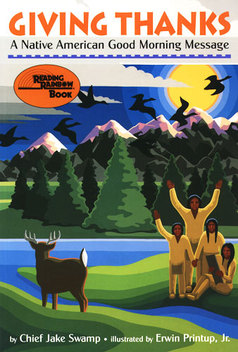
Giving Thanks: A Native American Good Morning Message

HAPPY THANKSGIVING! 

CELEBRATE THANKSGIVING and share this fun title with your child! 

Giving Thanks: A Native American Good Morning Message is appropriate for children of all ages.
Main_large


Summary:
Greet the morning in Giving Thanks: A Native American Good Morning Message written by Chief Jake Swamp and illustrated by Erwin Printup, Jr. Every morning you can find yourself thankful for so many things surrounding you. This story takes you into the Thanksgiving Address, an ancient message of peace and appreciation of Mother Earth and all her inhabitants. The simple words combined with the bright and bold illustrations are an excellent reminder that we always have something to be thankful for.

Practice this Comprehension Strategy-Picture Walk:
Use the pictures on the pages of Giving Thanks: A Native American Good Morning Message to ask your child what they think each page holds. Every page offers something new to be thankful for. Before reading the words on the page, ask your child what they see. Then open the discussion further to why we might be thankful for these things. 

Do this with your child:
Giving Thanks: A Native American Good Morning Message opens the door for a discussion about being grateful. This story shows many of the things that we have to be thankful for. Talk with your child about what you are grateful for and then ask them what they are thankful for. Have them draw a picture of some of those things, be sure to help them write what their picture is of. Use lots of colors just like in the story.

If you're interested in sharing Giving Thanks: A Native American Good Morning Message with your child you can find it from Lee and Low Books. Follow them on Twitter and like them on Facebook!

To hear Chief Jake Swamp deliver the Thanksgiving Address click here.

Friday, November 20, 2015

My Brother Charlie

CELEBRATE FAMILY LITERACY MONTH! FOR THE WEEKEND, share this fun title with your child! 

My Brother Charlie is appropriate for children ages 4-8.
My Brother Charlie


Summary:

Every family is different, including the family in My Brother Charlie written by Holly Robinson Peete and her daughter Ryan Elizabeth Peete. Explore this story from Callie's perspective as she talks about her relationship with her twin brother Charlie. Charlie has autism, this means he thinks differently than lots of people. Callie tells about the things he enjoys and the things he doesn't. And even though Charlie doesn't always say I love you, Callie tells all the ways he shows it.   

Practice this Comprehension Strategy-Compare and Contrast:

After you read My Brother Charlie, make a list with your child of all the things they remember that Charlie and Callie are good at, as well as all of the things that they find hard. Then also do this for you and your child. It will help them to realize that every person is good at some things but not others. In this way they can relate to both Charlie and Callie. They will be able to see the similarities and differences in Charlie and Callie and relate that to their own life.

Do this with your child:

This beautiful book describes what it can be like to have a sibling, a friend, a child with autism. It is important to know that just because someone has a hard time sharing their feelings, that doesn't mean they don't have feelings at all. Talk with your child about some of the ways to be kind and inclusive, even if someone seems shy or different. 

If you're interested in sharing My Brother Charlie with your child you can find it from Scholastic Press New York here. 

To learn more about Holly Robinson Peete's foundation for Autism Awareness click HollyRod.
Last Day to enter our
NATIONAL FAMILY LITERACY MONTH CONTEST
for your chance to win!!

Raising A Reader is celebrating National Family Literacy Month! Join us by liking us on Facebook and posting your favorite book to share with your family, tagging @RARnational and #RaisingAReader.


Contest will run Nov. 16-22
2 winners per week will receive:
-RAR tote bag with 5 age appropriate books 

Friday, November 13, 2015

Read Me A Story, Stella

CELEBRATE FAMILY LITERACY MONTH! FOR THE WEEKEND, share this fun title with your child! 

Read Me A Story, Stella is appropriate for children age 2-8.
Read Me a Story, Stella


Summary:

Share a day filled with the adventures of Stella and her brother Sam in the joyful Read Me A Story, Stella written and illustrated by Marie-Louise Gay. Stella uses books and stories to help guide and enlighten Sam as his creativity and imagination lead them through the day. Together they spend the day building dog a dog house, finding a caterpillar and discovering shapes in the clouds. Marie-Louise Gay takes the reader on a whimsical journey as this adorable family shares in the joys of reading.

Practice this Comprehension Strategy-Picture Walk & Inferring:
Before you read Read Me A Story, Stella take a picture walk through the story. Look at the whimsical illustrations with your child and ask them what they are seeing on the pages. Can they practice inference and make any guesses as to what will be in the story? What characters do they see? What does it look like they're doing?

Do this with your child:
Stella and Sam have a day full of outdoor adventures. Take a little time out of your day to go outside with your child. Look around to see if your child can relate any of their surroundings to those in Read Me A Story, Stella. Can they find a caterpillar or a frog? Do they see any shapes in the clouds above them? 

If you're interested in sharing Read Me A Story, Stella with your child you can find it from Groundwood Books through House Of Ansani Press here. Please like them on Facebook and follow them on Twitter.

Find more from Marie-Louise Gay on her website and check out her suggested list of activities for Read Me A Story, Stella here.