Showing posts with label sequencing. Show all posts

Friday, December 29, 2017

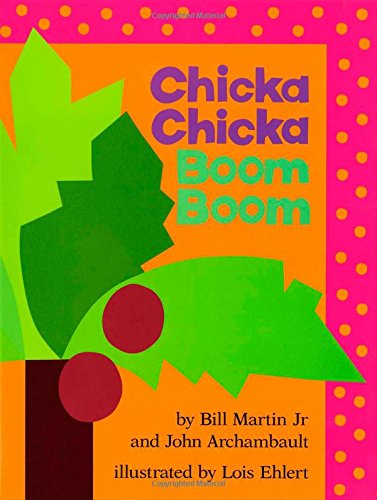
Chicka Chicka Boom Boom

FOR THE WEEKEND share this classic title with your child. 

Chicka Chicka Boom Boom is appropriate for children of all ages.
Summary:
Chicka Chicka Boom Boom is a classic rhyming alphabet story from Bill Martin Jr and John Archambault with bright and bold illustrations by Lois Ehlert. You'll be singing along with this lively alphabet rhyme which finds all of the letters racing up the coconut tree. The question is, will they all fit? Readers of all ages will delight in the rhythmic words, silly circumstance and colorful pictures which adorn this classic book.

Practice this Comprehension Strategy-Sequencing:
Chicka Chicka Boom Boom is a wonderful book to practice sequencing. Since this story features all the letters in alphabetical order, your reader will be able to help you put the story together. As you read, have your reader recite the letters with you as they climb up (and later away from) the coconut tree. Not only will they get to practice their ABC's they'll also find themselves interacting with the story and having an overall more engaging experience.


Do this with your child:
After you read Chicka Chicka Boom Boom check out the unlimited options of activities to accompany the book on Pinterest! Whether you want to cut, draw or paint your own letter coconut tree, make a Chicka Chicka Boom Boom inspired snack or play interactive games, Pinterest has what you need! You can also check out an animated YouTube video here.


If you're interested in sharing Chicka Chicka Boom Boom with your child you can find it published by Simon & Schuster here


Stay connected with us on FacebookTwitterInstagram and Pinterest.

Friday, December 1, 2017

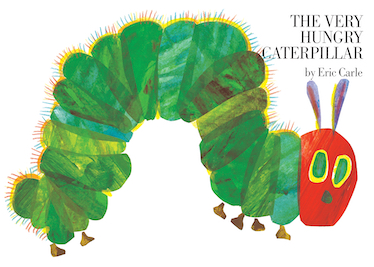
The Very Hungry Caterpillar

FOR THE WEEKEND share this classic title with your child. 

The Very Hungry Caterpillar is appropriate for children of all ages.

Image result for the very hungry caterpillar cover

Summary:
The Very Hungry Caterpillar eats his way through the pages of this classic book from Eric Carle. Follow along as this hungry caterpillar chomps his way through the days of the week and grows from egg to caterpillar to beautiful butterfly. 

Practice this Comprehension Strategy-Sequencing:
The Very Hungry Caterpillar is an excellent book to practice sequencing. This story is set in a week's time frame. Each day the caterpillar eats something more. As you read, put emphasis on what he's eating on which day so that afterward your reader can take a turn to try to put the days and foods in order. 


Do this with your child:
After you read The Very Hungry Caterpillar talk with your reader about the foods they like to eat. Talk with them about why making healthy choices is important. You can also find troves of activities to go along with this classic title ranging from art to math and science on Pinterest. Also check out the resources available through The World of Eric Carle.


If you're interested in sharing The Very Hungry Caterpillar with your child you can find it published by Philomel Books, an imprint of Penguin Random House, here


Stay connected with us on FacebookTwitterInstagram and Pinterest.

Friday, September 8, 2017

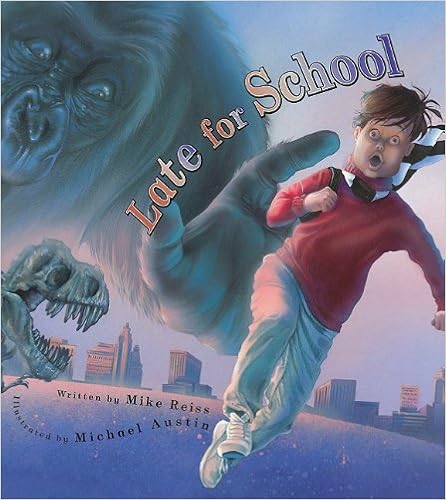
Late for School

FOR THE WEEKEND share this title with your child. 

Late for School is appropriate for school age children.


Summary:
Late for School is a lyrical adventure Smitty embarks on to make it to school on time. Smitty has never been late to school and black tar, a humongous whale, nor robots from Mars will stop him on his race to beat the school bell. Author Mike Reiss' rhythmic text paired with illustrator Michael Austin's vivid images are an exiting reminder that for some kids, getting to school on time can be quite the adventure!

Practice this Comprehension Strategy-Sequencing:
Late for School is a great book to practice sequencing. Sequencing is putting events in order. After you read flip back through the pages with your child to and try to remember which event came next. Did it rain whole snowmen or did Smitty get swallowed by a whale first. Ask questions like this about the other events in the story as well. By taking a further look into the exciting events of the story your reader will become more engaged and have a more impactful experience overall.

Do this with your child:

After you read Late for School talk with your reader about what other crazy adventures might have gotten in Smitty's way on his race to school. Choose your favorite idea and draw a picture of that extra adventure together!

If you're interested in sharing  Late for School with your child you can find it from Peachtree Publishers here


Click here to learn more about Raising A Reader and the work we do to promote early literacy and family engagement. 

Stay connected with us on FacebookTwitterInstagram and Pinterest.

Friday, April 28, 2017

One Frog Sang

FOR THE WEEKEND, share this title with your child. 

One Frog Sang is appropriate for children of all ages.


Summary:
One Frog Sang is a fun and playful book about a group of frogs on a rainy spring night. What starts with one frog singing a big Ka-blu-urp and quickly turns into a chorus of ribbits, croaks and chirps as you read along and count from one to ten, and back down again. Your child will delight in the silly sounds and bright pictures from author Shirley Parenteua and illustrator Cynthia Jabar.

Practice this Comprehension Strategy-Sequencing:
One Frog Sang is a great book for your child to practice sequencing. Sequencing is putting events in order. After you read go back through the pages with your child to recap which frogs made which sounds. As you do this, ask if they remember what sound comes next and the number of frogs making that sound. 

Do this with your child:

After you read One Frog Sang take the opportunity to practice counting. You can create a graph to track the frogs, group little frog toys, draw ten frogs and cut them out, or make different colored fingerprint frogs like the ones here and count how many of each color you create.
Image result for fingerprint frogs


If you're interested in sharing One Frog Sang with your child you can find it from Candlewick Press here. Please like them on Facebook and follow them on Twitter & Instagram for more inspiration.


Click here to learn more about Raising A Reader and the work we do to promote early literacy and family engagement. 

Stay connected with us on FacebookTwitterInstagram and Pinterest.

Friday, January 20, 2017

There Was a Cold Lady Who Swallowed Some Snow

FOR THE WEEKEND, share this winter themed title with your child! 

There Was a Cold Lady Who Swallowed Some Snow is appropriate for children of all ages.

There Was a Cold Lady Who Swallowed Some Snow

Summary:
There was a Cold Lady who Swallowed Some Snow is a wintry edition to the twists on the familiar There Was an Old Lady Who Swallowed a Fly. Lucille Colandro provides rhyming, goofy text with Jared Lee's silly illustrations to bring this wacky book to life. After swallowing snow, a pipe, a hat, and more you are in for a surprise ending!

Practice this Comprehension Strategy-Sequencing:
After you read There Was a Cold Lady Who Swallowed Some Snow you and your reader will have the perfect opportunity to practice sequencing, putting events in the order which they happened. The repetition and rhythm in the story should help prompt your child's memory when putting the events in order. If they need a reminder, let them look back into the book and see if they can find the step based on the pictures.

Do this with your child:
After you read There Was a Cold Lady Who Swallowed Some Snow you will see that all of the things that the cold lady have swallowed have helped her create a snowman. Use the things she has swallowed in the book to make a snowman of your own. Don't live in the snow? Try using play dough or shaving cream to make your snowman! By having to recall and use items the cold lady used, your child will be deepening heir involvement with the story.

If you're interested in sharing There Was a Cold Lady Who Swallowed Some Snow with your child you can find it from Scholastic Books here. You can like them on Facebook and follow them on Twitter for more inspiration.


Friday, November 25, 2016

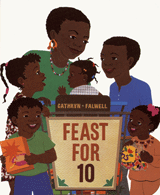
Feast for 10

FOR THE THANKSGIVING WEEKEND, share this title with your child! 

Feast for 10 is appropriate for children of all ages.

Feast for 10-9780618382262

Summary:
Feast for 10 from author Cathryn Falwell is a simple and beautiful story listing out all the things this family is using for their feast. You'll count from 1-10 twice as the family makes their way through the grocery store and through the meal prepping process. Readers young and old will delight in the familiarity of the traditional family meal time and lively collage images.

Practice this Comprehension Strategy-Sequencing:
Feast for 10 is a perfect story to practice sequencing with your young reader. Each page takes you through a new number. After reading, look through the story again and have your child put the events in order. Did the family pick 5 types of beans or 2 pumpkins first? Ask questions using the words first, then and next. By analyzing the sequence of events in the story, your child will further their engagement with the book and deepen their interest in the story.

Do this with your child:
After reading Feast for 10 talk with your child about traditions. Does your family have a specific meal they like to prepare? Did you celebrate Thanksgiving with a turkey and mashed potatoes or do you prepare a different menu? This is also an excellent book to use for counting. You and your child can count items on your own trip to the grocery store or even in your own kitchen!

If you're interested in sharing Feast for 10 with your child you can find it from Houghton Mifflin & Harcourt here. Please like them on Facebook and follow them on Twitter for more inspiring tales.


Friday, June 24, 2016

How My Parents Learned to Eat

FOR THE WEEKEND, share this fun title with your child! 

How My Parents Learned to Eat is appropriate for children age 4 and up.

Summary:
How My Parents Learned to Eat tells the story of John and Aiko, an American sailor and a Japanese school girl. They meet while John is stationed in Japan and they spend every evening together walking and talking. John would like to ask Aiko to dinner but he is nervous because he does not know how to use chopsticks. Aiko thinks maybe John is not asking her to dinner because she does not know how to use a knife and fork. They each secretly learn how to use the other's utensils and finally have dinner together.

Practice this Comprehension Strategy-Sequencing:
How My Parents Learned to Eat is a great story to practice sequencing, putting events in the order which they happened. Have your child tell you what happens first, what comes next, and what happens last. Use words like before, then, after and next to transition between events in the story. By recalling events and characters your child is deepening their engagement with the story.

Do this with your child:
After reading How My Parents Learned to Eat enjoy a meal using a utensil you don't typically use. Try eating different foods with chopsticks versus a fork and knife. Talk about which foods are easier to use with which utensils and decide if you have a favorite to  use.

If you're interested in sharing How My Parents Learned to Eat with your child you can find it from Houghton Mifflin Harcourt here. Please like them on Facebook and follow them on Twitter

Friday, May 20, 2016

The Library

FOR THE WEEKEND, share this fun title with your child! 


The Library is appropriate for all ages.


Summary:
Follow the story of Elizabeth Brown in The Library from author Sarah Stewart and illustrator David Small.Elizabeth Brown was different than the other children, she didn't want to to play with dolls, she didn't want potato chips, she wanted to read. As she grew older, her book collection grew and grew until there was not even room to get to her front door. The way she solves the problem will warm the hearts of book lovers, young and old.

Practice this Comprehension Strategy-Sequencing:
After you read The Library pull out some of the major details. You might want to choose Elizabeth Brown falls from the sky, she goes to school, buys a house, she vacuums or buys groceries, and finally she opens a library. Ask your child about the order in which these events occur in the story, Use words like "first," "then," and "next."  This will further their engagement in the story and therefore their comprehension of the text.

Do this with your child:
After reading The Library take a trip to your local library and pick out a handful of books to take home. Sign your child up for a library card if they don't already have one!

If you're interested in sharing The Library with your child you can find it from Square Fish, an imprint of Macmillan Publishers here. Please like them on Facebook and follow them on Twitter and Instagram.


Friday, April 8, 2016

Something Special for Me

FOR THE WEEKEND, share this fun title with your child! 

Something Special for Me is appropriate for children of all ages.

Summary:
Something Special for Me from author Vera B. Williams is a thoughtful story about Rosa's birthday gift. Rosa and her family have a special jar that is half full of coins. Everyone in her family puts their extra tips and loose change into the jar. As Rosa's birthday is approaching Mama and Grandma decide that Rosa can take the coins to the bank and use the money to pick out the perfect birthday gift. But deciding what to spend that hard earned money on proves to be quite the difficult decision. Will Rosa ever find a gift that is just right?

Practice this Comprehension Strategy-Sequencing:
Something Special for Me is a terrific book for practicing sequencing, putting the events of the story in the Order that they happen. To help deepen your child's engagement in the story ask them questions as you read. After you have finished sharing the story, ask your child to tell you in what order did the events occur. Did she go to the bank or get ice cream first? What store did she go to after trying on the roller blades?

Do this with your child:
After reading Something Special for Me talk with your child about why they think it took Rosa so many different tries to find the perfect gift for herself. Do they think that Rosa was just being picky, or was she being thoughtful about what she chose? Then ask if they would like to start saving their coins to buy something special for themselves! You can use a jar like Rosa or find a special piggy bank where they can keep their coins.

If you're interested in sharing Something Special for Me with your child you can find it from Greenwillow Books, an Imprint of Harper Collins Publishers here. Please like them on Facebook and follow them on Twitter and Instagram.

Friday, March 11, 2016

Planting a Rainbow

FOR THE WEEKEND, share this fun title with your child! 

Planting a Rainbow is appropriate for children of all ages.

Summary:
Planting a Rainbow is a beautiful book that will show children the engaging process of growing a garden and recognizing the colors of the rainbow. They will delight in the bright and bold pictures and simple text as they journey through the seasons picking flower bulbs, buying seeds and seedlings and planning the garden. Then they will see the bulbs sprout and the seeds germinate, and in the end create a beautiful rainbow of flowers. They learn about different flowers by their colors and how water, soil, and sun are necessary for plants to grow.

Practice this Comprehension Strategy-Sequencing:
After you read Planting a Rainbow talk with your child about the order of the garden's growing. You start with buying a seed or bulb, but what happens next? Let your child look through the pages to prompt their responses. Putting the events in order will help deeper your child's engagement with the story and further their understanding of the plant life cycle. 

Do this with your child:
Planting a Rainbow provides an excellent opportunity to explore color with your child. After you read the story, go outside to see if you can find your own rainbow of colors in nature. You can also gather items from around your home: a red book, an orange orange, a yellow glove, etc. to create a rainbow of your own.


If you're interested in sharing Planting a Rainbow with your child you can find it from Houghton Mifflin Harcourt here. Please like them on Facebook and follow them on Twitter.

Friday, December 11, 2015

Tacky and the Winter Games

FOR THE WEEKEND, share this fun title with your child! 

Tacky and the Winter Games is appropriate for children age 3-8.


Summary:
Tacky the Penguin is a bit of a misfit among his fellow penguins. He never seems to do things quite like his friends. The same is true in Tacky and the Winter Games from author Helen Lester and illustrator Lynn Munsinger. The penguins from Nice Icy Land travel to compete in the winter games with Tacky in tow. He may not have the most conventional approach to the games but read to find out how Tacky helps get his team into first place in Tacky and the Winter Games.

Practice this Comprehension Strategy-Sequencing:
As you read Tacky and the Winter Games talk with your child, making a point to emphasize what the penguins are doing now. Once you have finished the story, practice sequencing, putting the stories events in order. Did the penguins of Nice Icy Land march to the games before they trained? Was the bobsled race before or after the relay race? If your child needs prompting, let them look through the pages to infer from the pictures in the story.

Do this with your child:
Tacky does some silly things in Tacky and the Winter Games from skiing on thawed fish skis to sleeping during sit-ups. Ask your child to pick their favorite thing that Tacky does in the story and draw a picture of it. They can also draw themselves doing the silly things with Tacky. 

If you're interested in sharing Tacky and the Winter Games with your child you can find it from Houghton Mifflin Company Books here. For more fun reads, please follow them on Twitter and like them on Facebook.


Limited Edition Ruby the Reader Ornament 


Purchase your very own holiday penguin ornament, Ruby the Reader. While Supplies Last! Support Raising A Reader through the purchase of this one-of-a-kind ornament by Christopher Radko. All Proceeds benefit Raising A Reader. Click here to order.

Sunday, November 1, 2015

I Love My Pirate Papa

HAPPY NATIONAL FAMILY LITERACY DAY! 
For the entire month of November, Raising A Reader will highlight books that focus on families!

CELEBRATE FAMILY LITERACY MONTH and share this fun title with your child! 

I Love My Pirate Papa is appropriate for all children.
(Harcourt Children's Books, 2007)

Summary:
Even pirates read bedtime stories! In the charming story, I Love My Pirate Papa, a young boy takes us on a journey through his day as a pirate with his pirate papa. Together they hoist the anchor, discover hidden treasure, chow down on some grub and then his pirate papa tucks him in with his bedtime story. You and your child will adore he darling illustrations by Kyle M Stone and delight in the fun rhyming story written by Laura Leuck. 

Practice this Comprehension Strategy-Sequencing:
While you read I Love My Pirate Papa, ask your child to listen and watch the order of this pirate family's day. After you have ready through the story, pull out a few details and ask your child if they remember what order they happened. For example, did they eat stew before or after divvying up the treasure? This daily routine can be reflected in your child's own life. Does your child eat dinner before going to school? I Love My Pirate Papa provides an excellent opportunity to discuss sequencing and order within the story and within your child's own life.

Do this with your child:
What child doesn't love to be silly? If you're feeling adventurous, read I Love My Pirate Papa (or just parts of it) in your best pirate voice. Reading in different voices exposes your child to new experiences and can deepen their interest and engagement in the story. Ask your child to try out their best pirate voice too. Chance "arrrre" that there will be some serious giggling all around!

If you're interested in sharing I Love My Pirate Papa with your child you can find it from Houghton Mifflin Harcourt here and like them on Facebook.

Follow Kyle M. Stone on Tumblr.

Friday, October 16, 2015

Gathering the Sun: An Alphabet in Spanish and English

FOR THE WEEKEND, share this fun title with your child! 


Gathering the Sun: An Alphabet in Spanish and English is appropriate for children 4-8 and is a perfect book to curl up on the couch under a blanket with this fall.


Summary:
Gathering the Sun: An Alphabet in Spanish and English is a collection of poems in Spanish and English, one for each letter of the alphabet describing farms and harvest. The beautiful book from author Alma Flor Ada is perfect alongside the traditional style paintings of Simon Silva on each page, drenched in bold, warm colors which help bring the poetry to life.

Practice this Comprehension Strategy-Take a Picture Walk/Sequencing:
As you read through Gathering the Sun: An Alphabet in Spanish and English, use the beautiful paintings to ask your child what they think that page's poem might be about. For an older child, you can also try sequencing and working on alphabetical order. Help your child remember what letter was on the previous page and try to figure out what letter the poem on the next page will start with.

Do this with your child:
Read through the poems in Gathering the Sun: An Alphabet in Spanish and English in the language you are more comfortable with, then try the other language. Practice the titles of each poem in English and Spanish with your child. It's a good possibility that you will both be exposed to something new and different. It's okay if you're unsure of some of the words, that is how we learn!

If you're interested in sharing Gathering the Sun: An Alphabet in Spanish and English with your child you can find it from Harper Collins Publishers here.

Like illustrator Simon Silva on Facebook and follow him on Twitter.