Friday, May 26, 2017

On a Beam of Light: A Story of Albert Einstein

FOR THE WEEKEND, share this STEM title with your child. 

On a Beam of Light: A Story of Albert Einstein is appropriate for children of all ages.


Summary:
Author Jennifer Berne tells the true story of the ever curious Albert Einstein's life in On a Beam of Light: A Story of Albert Einstein. Your reader will learn about Albert from childhood and beyond as he questioned everything around him, and created ideas and thoughts to explain all of life's mysteries. Albert thought from the smallest scale, exploring atoms that make everything up, to the largest scale, researching the size and shape if the entire universe. If your reader is a curious kid, they will delight in learning about Albert Einstein, the genius.

Practice this Comprehension Strategy-Take A Picture Walk:
On a Beam of Light: A Story of Albert Einstein is a wonderful book to take a picture walk before reading. Flip through the pages with your reader and ask what they see on each page. You'll find a baby growing from a tiny newborn into a white haired gentleman. As you go through the pages, ask your child what is happening around the baby, the boy and the man. Then when you read the story relate what your reader noticed in your picture walk to the story.

Do this with your child:

After you read On a Beam of Light: A Story of Albert Einstein check out some kid friendly science experiments to spark your reader's curiosity from Architecture and Design here.

If you're interested in sharing On a Beam of Light: A Story of Albert Einstein with your child you can find it from Chronicle Books here. Please like them on Facebook and follow them on Twitter & Instagram for more inspiration.


Click here to learn more about Raising A Reader and the work we do to promote early literacy and family engagement. 

Stay connected with us on Facebook, Twitter, Instagram and Pinterest.

Friday, May 19, 2017

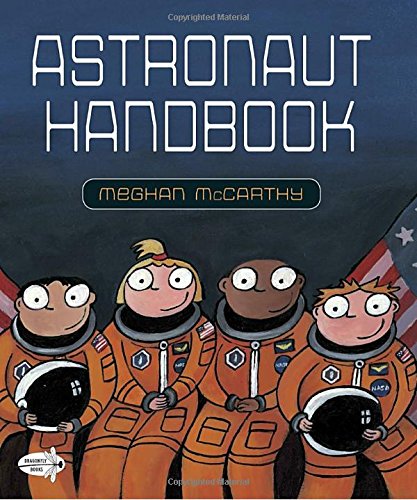
Astronaut Handbook

FOR THE WEEKEND, share this STEM title with your child. 

Astronaut Handbook is appropriate for children of all ages.


Summary:
Author Meghan McCarthy takes young readers to astronaut school in Astronaut Handbook. Your reader, no matter their interests, can find a spot in outer space. Whether you like biology or engineering or flying planes or deep sea diving, there are jobs of all kinds that need doing. But before you get to space, you must train very hard - fitness tests, survival training, teamwork and lots of studying will prepare you for your journey. McCarthy does a fantastic job conveying difficult concepts and ideas using easy to understand text and images which will spark your child's imaginations and get them excited about blasting off!

Practice this Comprehension Strategy-Summarize:
Astronaut Handbook is a great book to practice summarizing. As you read, make a point to ask questions and answer any questions your child might have. Engaging your child while reading will help them be able to better summarize the text afterward. Once you've finished, let your child hold the book and flip through the pages as they tell you about the different jobs that astronauts do, they ways they train, and all the preparation for their trip to space.

Do this with your child:

After you read Astronaut Handbook you and your reader can check out the NASA Kids' Club here. The site is filled with fun games and activities to check out with your space explorer.

If you're interested in sharing Astronaut Handbook with your child you can find it from Penguin Random House here. Please like them on Facebook and follow them on Twitter & Instagram for more inspiration.


Click here to learn more about Raising A Reader and the work we do to promote early literacy and family engagement. 

Stay connected with us on Facebook, Twitter, Instagram and Pinterest.

Friday, May 12, 2017

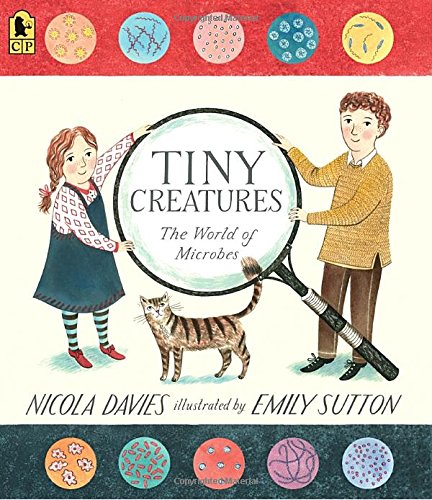
Tiny Creatures: The World of Microbes

FOR THE WEEKEND, share this STEM title with your child. 

Tiny Creatures: The World of Microbes is appropriate for school age children.


Summary:
Tiny Creatures: The World of Microbes explores a world unseen by the human eye. The text explores the size and quantity of the microbes, diving further into the many amazing things these tiny creatures accomplish. Author Nicola Davies, a zoologist, does an incredible job explaining a vast concept to little minds. Illustrator Emily Sutton's images create a visual understanding that young and old will appreciate. 

Practice this Comprehension Strategy-Making Connections:
Tiny Creatures: The World of Microbes is a wonderful book to practice making connections. After you read, talk with your child about all of the ways that microbes interact with their own environment. Do they eat yogurt? Have they washed the playground dirt off their hands? Do they enjoy watching the clouds in the sky? All of these activities, and so many more, involve the work of microbes.

Do this with your child:

After you read Tiny Creatures: The World of Microbes you and your reader can make some large scale microbes of your own. Bust out the pipe cleaners, the pom poms, the wiggle eyes and the glue and recreate some of the images from the book or create your own microbe art!
Image result for pipe cleaner microbes craft


If you're interested in sharing Tiny Creatures: The World of Microbes with your child you can find it from Candlewick Press here. Please like them on Facebook and follow them on Twitter & Instagram for more inspiration.


Click here to learn more about Raising A Reader and the work we do to promote early literacy and family engagement. 

Stay connected with us on Facebook, Twitter, Instagram and Pinterest.

Friday, May 5, 2017

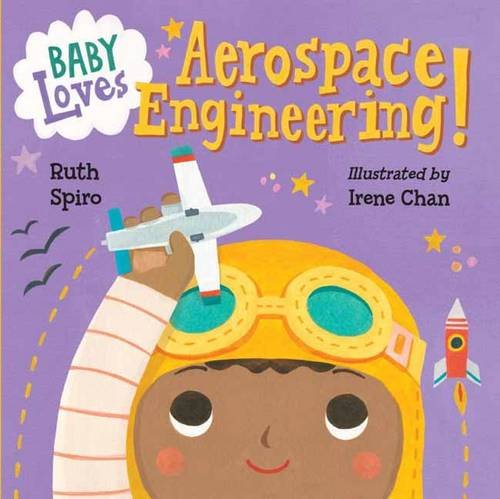
Baby Loves Aerospace Engineering

FOR THE WEEKEND, share this STEM title with your child. 

Baby Loves Aerospace Engineering is appropriate for younger children.


Summary:
Baby Loves Aerospace Engineering is an adorable introduction to the world of aerospace engineering. Your child will delight in bright and bold images as simple text explain the basic fundamentals of flight, from birds to planes to rockets. Ruth Spiro and Irene Chan's explanations and images will satisfy an expert and captivate your child in this one of a kind STEM board book.

Practice this Comprehension Strategy-Retelling:
Baby Loves Aerospace Engineering is a wonderful book to practice retelling with your child. After you read, let your child take a turn and read the book to you. Offer help if they need it but otherwise let them lead the way! This is a great strategy to build confidence in their 'reading' and strengthen their memory and inference skills. 

Do this with your child:

After you read Baby Loves Aerospace Engineering practice flight on your own! Below is an easy tutorial to follow to make your own paper airplanes.
Image result for paper airplane


If you're interested in sharing Baby Loves Aerospace Engineering with your child you can find it from Charlesbridge Publishing (currently out of stock so we've provided a link to Amazon) here. Please like them on Facebook and follow them on Twitter & Instagram for more inspiration.


Click here to learn more about Raising A Reader and the work we do to promote early literacy and family engagement. 

Stay connected with us on Facebook, Twitter, Instagram and Pinterest.

Friday, April 28, 2017

One Frog Sang

FOR THE WEEKEND, share this title with your child. 

One Frog Sang is appropriate for children of all ages.


Summary:
One Frog Sang is a fun and playful book about a group of frogs on a rainy spring night. What starts with one frog singing a big Ka-blu-urp and quickly turns into a chorus of ribbits, croaks and chirps as you read along and count from one to ten, and back down again. Your child will delight in the silly sounds and bright pictures from author Shirley Parenteua and illustrator Cynthia Jabar.

Practice this Comprehension Strategy-Sequencing:
One Frog Sang is a great book for your child to practice sequencing. Sequencing is putting events in order. After you read go back through the pages with your child to recap which frogs made which sounds. As you do this, ask if they remember what sound comes next and the number of frogs making that sound. 

Do this with your child:

After you read One Frog Sang take the opportunity to practice counting. You can create a graph to track the frogs, group little frog toys, draw ten frogs and cut them out, or make different colored fingerprint frogs like the ones here and count how many of each color you create.
Image result for fingerprint frogs


If you're interested in sharing One Frog Sang with your child you can find it from Candlewick Press here. Please like them on Facebook and follow them on Twitter & Instagram for more inspiration.


Click here to learn more about Raising A Reader and the work we do to promote early literacy and family engagement. 

Stay connected with us on Facebook, Twitter, Instagram and Pinterest.

Friday, April 21, 2017

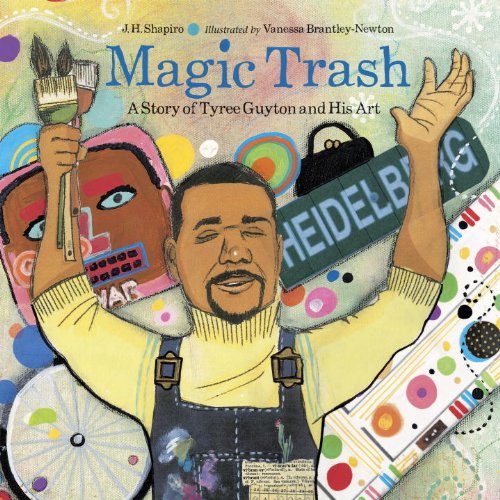
Magic Trash

FOR THE WEEKEND, share this title on Earth Day with your child. 

Magic Trash is appropriate for school age children.


Summary:
Magic Trash is a beautiful and lyrical story about artist Tyree Guyton. As a child growing up with ten brothers and sisters in Detroit, Tyree Guyton didn't have much. But that didn't discourage him from playing, creating and innovating. Every piece of trash he saw along his way could be transformed into something new; bottle caps were rockets, popsicle sticks were building boards for houses, and when you add just the right paint what had been discarded as trash is given new life. Follow the life of this artist as he helped start a movement to transform his deteriorating neighborhood into an interactive sculpture garden, and raise awareness about recycling, environmentalism, and community on a global level.

Practice this Comprehension Strategy-Make Connections:
Magic Trash is a great book for your child to practice making connections because it tells a true story about another person's life. As you read, talk with your child about the similarities and differences they can find between themselves and Tyree Guyton. By reading about a real person and making connections, whether finding things in common or learning something new, your child will be further engaged in the story and learn more about the world around them.

Do this with your child:

After you read Magic Trash you might be inspired to create some magic trash art of your own. Do you have any milk jugs, plastic juice bottles, aluminum foil, old shoelaces lying around? Transform these into a one of a kind work of art, then bring on the paint! While you work on your projects, talk with your child about the importance of recycling and conservation. 

Image result for why recycle for kids


If you're interested in sharing Magic Trash with your child you can find it from Charlesbridge Publishing here. Please like them on Facebook and follow them on Twitter & Instagram for more inspiration.


Click here to learn more about Raising A Reader and the work we do to promote early literacy and family engagement. 

Stay connected with us on Facebook, Twitter, Instagram and Pinterest.

Friday, April 14, 2017

Flower Garden

FOR THE WEEKEND, share this title with your child. 

Flower Garden is appropriate for children of all ages.

Image result for flower garden eve bunting

Summary:
Flower Garden is a lovely spring title that celebrates the beauty even the tiniest of gardens can bring. Follow this little girl and her soon to be garden as they go from the store, to the bus, to their apartment. Author Eve Bunting's simple rhyming text perfectly accompany the stunning images from illustrator Kathryn Hewitt to create this special garden surprise. 

Practice this Comprehension Strategy-Making Connections:
Flower Garden is a wonderful story for your reader to practice making connections. As you read, ask questions about what experiences they have in common with the little girl in the story. Has your child picked out flowers a garden, do they help with the shopping, do you live in an apartment? Books serve as both windows for readers to catch a glimpse into a life they might not have experienced; but they also serve as mirrors where a reader can see their own story reflected. By making connections to their own life and by reading about a life different from their own, a reader will become more engaged in the story and its outcomes.

Do this with your child:

After you read Flower Garden plant a window garden of your own! You can always find a place to put a happy little garden. You can plant flowers or herbs to use in your kitchen. Check out this article for inspiration.


If you're interested in sharing Flower Garden with your child you can find it from Houghton Mifflin Harcourt here. Please like them on Facebook and follow them on Twitter & Instagram for more inspiration.


Click here to learn more about Raising A Reader and the work we do to promote early literacy and family engagement. 

Stay connected with us on Facebook, Twitter, Instagram and Pinterest.